How Three Bold Moves of Dan Trachtenberg Saved the Predator Franchise
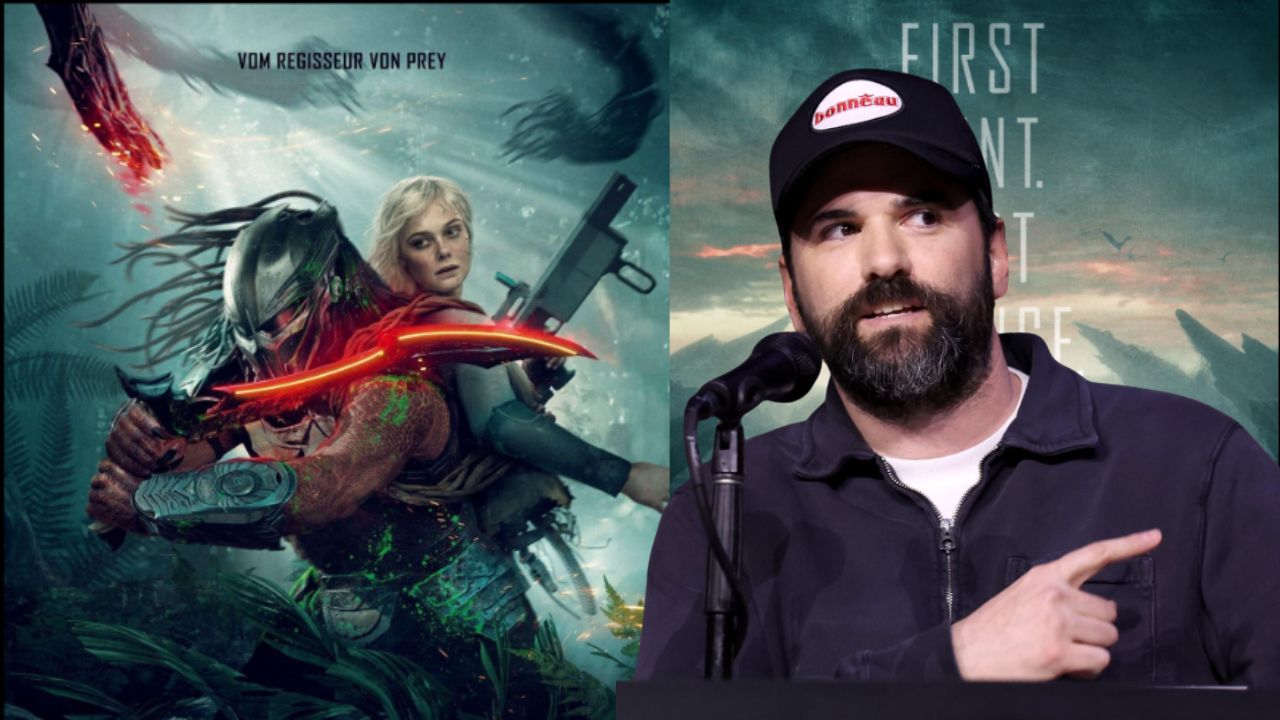
The premise of the Dan Trachtenberg Predator Franchise series had been very clear for years: human soldiers are hunted by the Yautja, a fierce, technologically advanced alien hunter who is dropped into a new terrain. Action-horror excellence was achieved in the 1987 classic, but subsequent sequels merely rehashed this simple rhythm while failing to expand the core mythology or provide real emotional resonance.
The critical failures of the crossover films, like Aliens vs. Predator: Requiem (2007), which sank to a horrid 12% on Rotten Tomatoes led to draining the franchise of all creative bleed. It was time for a radical shake-up, and that is exactly what Dan Trachtenberg Predator Franchise gave us.
It’s not an understatement to say that Trachtenberg has single-handedly revived the Predator universe — not once, but three times in just three short years through three different projects: Prey (2022), the animated anthology Predator: Killer of Killers (2025), and the upcoming feature Predator: Badlands (2025). Together, these movies increased the aesthetic, narrative, and emotional scope of what a Predator story can be, and now the series has the green light to “go anywhere.”
The Primal Reset of Prey (2022)
The renaissance started by going backwards. Prey turned back the clock to the 18th century, placing the action in the Comanche Nation. The conflict was shifted away from the futuristic heavy weapons, turning the hunt into a primal game of brains and brawn, similar to the ending of the original film when Dutch left his guns behind for mud, fire and traps.
The lead, Naru (Amber Midthunder), had a strong emotional center that previous sequels rarely offered. It was less about fighting to survive, and more about being underestimated as a tracker, who grows into a cunning survivor seeking to find a way to prove herself and make a name for her tribe.
This character-driven movie approach received critical and commercial acclaim, scoring close to 94-95% on Rotten Tomatoes, and becoming the most watched film premiere across all films and television series on Hulu in the United States.
Importantly, Prey leveraged the fight to comment on technological dependence. Discussions among fans on sites such as Reddit continually remarked that the Feral Predator was made vulnerable because of its dependence too much on advanced technology.
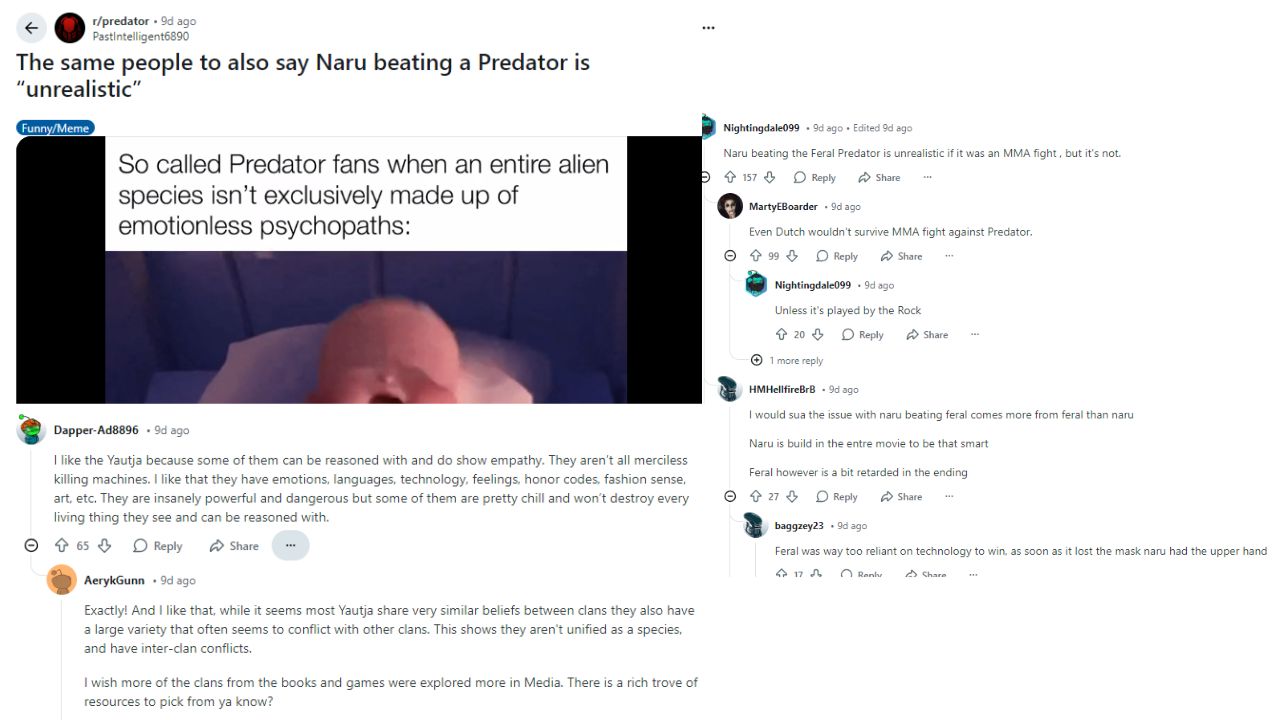
Its primitive armament and reliance on mechanisms such as the harpoon cannon, even after its mask (the targeting system) was compromised, illuminated a thematic contrast: Naru’s intimate knowledge of the natural world was superior to the Feral Yautja’s technological complacency.
By boiling the franchise down to its core and pairing that with layered character development and a culturally specific narrative, Prey demonstrated that the IP still held powerful stories to tell.
The Lore Engine of Killer of Killers (2025)
Trachtenberg fast-tracked the expansion pace for the franchise with two films in 2025, beginning with the animated anthology Predator: Killer of Killers. Premiering on Hulu, this film featured several Melee confrontations between Yautja and renowned assassins across human history.
The charm of the scheme was its form. What had seemed like a series of isolated short stories was actually a narrative bait-and-switch, culminating in a unified final act. According to Screenrant, This sequence retroactively converts the series from a string of isolated hunts to a sprawling, historical and cosmic saga.
By weaving together disparate hunts, Killer of Killers creates a grander meta-narrative that not only allows the series to venture to different times and places, but effectively challenges the very idea that previous games were nothing more than iterations on the same action beats.
The Inverted Antagonist of Badlands (2025)
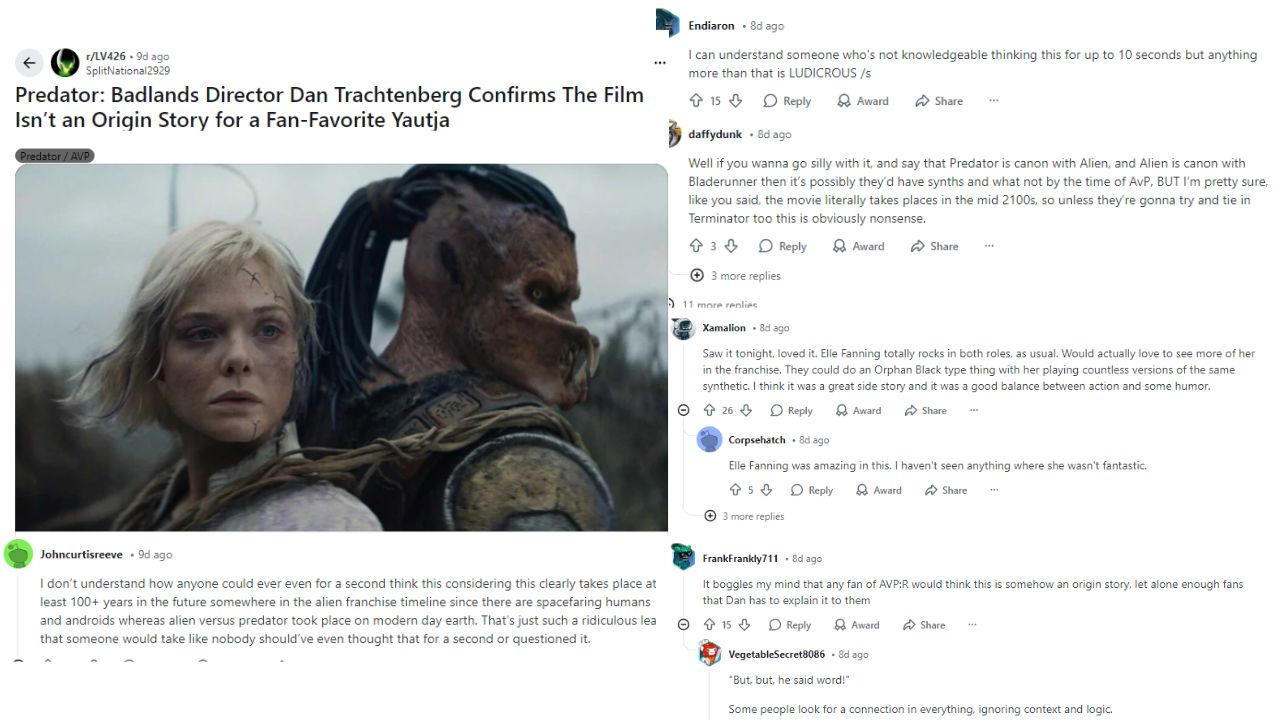
The biggest change is Predator: Badlands, scheduled to hit theaters in November 2025, which is completing sound mixing and preparing to premiere. Inverts the series formula entirely by focusing on a Yautja protagonist named Dek. Dek is considered by his own clan to be small and physically weak, an outcast who must survive on the bitterly hostile death planet Genna.
This change in viewpoint lets Trachtenberg chase a more complex thematic center: an unvarnished critique of the toxic masculinity of the Yautja’s savage hunting culture.
The 1987 film did play this for laughs, revealing the ridiculousness of Arnold Schwarzenegger’s super buff commando team getting taken out by an invisible enemy. Badlands makes plain that Dek’s path is to turn his back on his sadistic and barbaric father, a renowned hunter, and to form his own, better clan.
Also, Badlands is able to weave in the larger universe with ease. Dek makes an unlikely pact with Thia (Elle Fanning), an android working for the Weyland-Yutani Corporation. This line of attack is the third link-up with the Alien series for the franchise, but mercifully does not baba engle-usa smash with previous incarnations.

It instead borrows from Weyland-Yutani’s mythos — the aggressive acquisition of hazardous alien life forms to turn into weaponry to raise the stakes of the internal Yautja drama without tearing apart the series. This is a calculated move, as it lets the franchise maintain sprawling story arcs based on ideological conflict rather than simple monster battles.
Franchise’ Future
Having already demonstrated that the Predator IP can sustain historical survival thrillers (Prey), expansive animated world-building (Killer of Killers), and thematic space operas focused on the Yautja themselves (Badlands), Trachtenberg is now effectively being given the keys to the kingdom.
The future path is already a bold one. Trachtenberg has disclosed that these three projects came out of a starting batch of four concepts, and he is “so excited” to go after the secret third project, which he says will delve into “no one has done that in sci-fi. No one has done that in Predator”.
Conclusion
Dan Trachtenberg’s film has not just breathed new life into a dying series, it has transformed what the Predator world can be. By stripping the mythology to its primal bones in Prey, expanding its narrative architecture with Killer of Killers, and boldly flipping the perspective in Badlands.
Trachtenberg has transformed a once-stultified series into one of sci-fi’s most chameleonic playfields. Trachtenberg hinting at even more extreme ideas just waiting in the wings, the franchise isn’t just back; it’s about to get its most exciting evolution yet.
Welcome to Funsterworld — your source for the latest buzz from Hollywood’s creative underworld. Here, we discover that Dan Trachtenberg’s three projects came out to change the long-lived franchise concept.
About the Author