Why You Need to Binge ‘Agents of S.H.I.E.L.D.’ Before Avengers: Doomsday
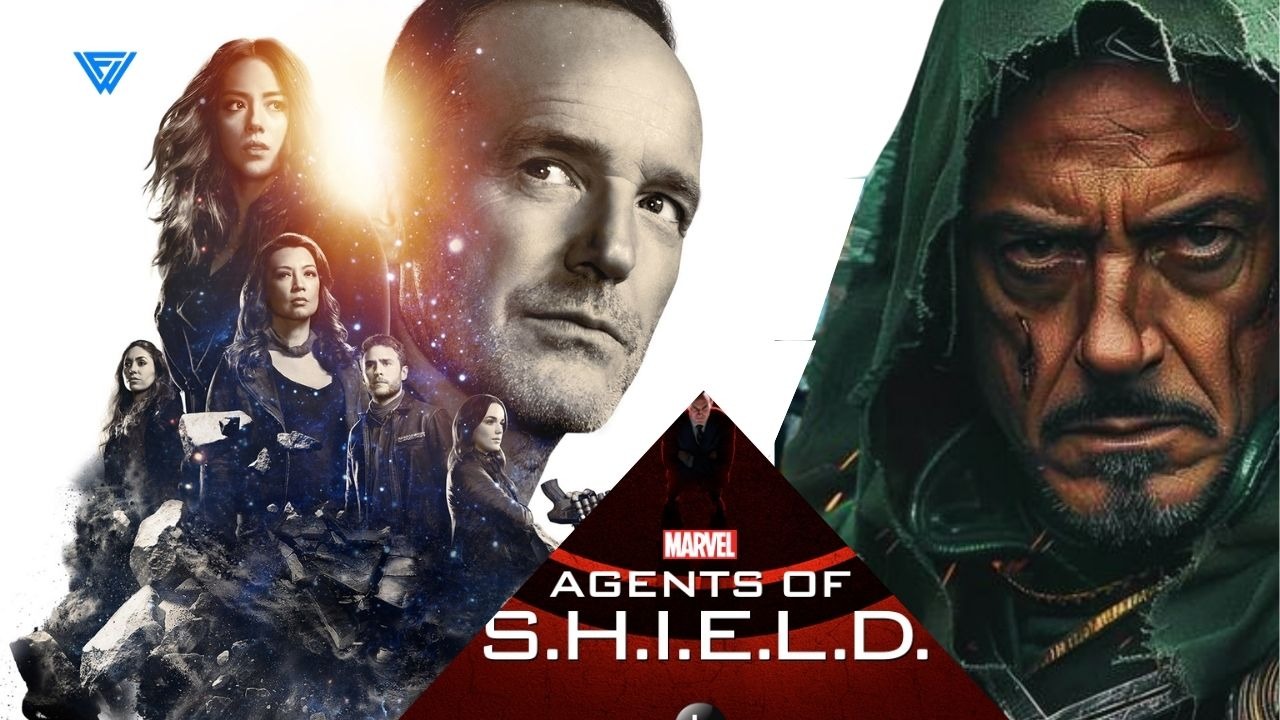
The Marvel Cinematic Universe has grown into an enormous creature of a franchise. With Avengers: Doomsday officially scheduled for a theatrical release in December 2026, and you can adequately prepare for Robert Downey Jr. ‘s world-ending return as Doctor Doom. If you’re expecting to get bombarded with multiverse madness in Doomsday, then Marvel’s Agents of S.H.I.E.L.D. is mandatory viewing.
It takes place as a standalone story, but this series has everything you could want: nail-biting suspense, emotional character arcs with the original Avengers, and mind-boggling sci-fi ideas that challenge the very limits of imagination. It’s the perfect preparation for Marvel’s big multiverse story coming up.
They Wrote the Playbook on Multiverse and Time Travel
Long before He Who Remains was ensconced in his isolated citadel pontificating on branching timelines to all comers, Agent Coulson’s team was busy tearing a hole in the space-time continuum.
The later seasons of Agents of S.H.I.E.L.D. especially Seasons 5 and 7 plunged full-force into the very mechanics that define the current Multiverse Saga. We’re talking alien monoliths serving as quantum bridges, unbreakable time loops and alternate dystopian futures in which the Earth is literally cracked open like an egg. They even used the Quantum Realm to jump timelines before the Avengers made it look easy in Endgame.
Agents of S.H.I.E.L.D. is a master class in alternate realities and emotional stakes tied to them. The show never plays these timelines for “wacky hijinks,” Instead, they are core to the characters’ journeys. The division of Fitz and Simmons across not only space, but centuries, is one of the most emotionally resonant storylines. The difficulty of coming back together, for them, is a testament not only to how emotional their bond is, but how desperately timelines need to be fixed. If Doomsday is going to explore multiversal chaos with Victor Von Doom as its lead, AoS is top option for telling a story with cosmic stakes that still retains human connection.
The Framework: A Masterclass in Distorted Reality
If the MCU adheres to comic lore at all, Doctor Doom’s entire modus operandi in Doomsday and Secret Wars is centered on absolute control. He collects broken shards of dead universes and weaves them into “Battleworld,” where he reigns as undisputed savior. He makes a world in which his word is the only truth.
Because Agents of S.H.I.E.L.D. nail that exact idea perfectly in Season 4 with the Framework arc. The Framework was this giant, elaborate virtual reality in which one regret was erased from each character’s past, resulting in a frightening alternate timeline where Hydra took over and ruled the world. It’s some of the finest television Marvel has ever made.
The way that show treated an altered, authoritarian reality—one where the heroes have had their memories stripped and are made to wander through a nightmare they think is real—is simply extraordinary. It gives you exactly the kind of paranoia and dread you want going into a storyline featuring Doom.
Apocalyptic Stakes and Thriller Pacing Agents of S.H.I.E.L.D
A massive crossover event named Doomsday teases a menace that makes Thanos seem like a rehearsal act. But the natural difficulty with big, world-ending stakes in a two-hour film is that they rarely manage to make you feel the true weight of the moment. The pace is just too fast.
Marvel’s Agents of S.H.I.E.L.D was well versed in slow burn glory. It had the suspense and rhythm of a binge-worthy psychological thriller with high stakes. Instead of rushing to a CGI-smothered endgame, the series loitered in seasons of 22 episodes building its villains with care.
Remember the Graviton storyline? What about the terrifying, slow-drip infiltration of the Life Model Decoys?
Marvel’s Agents of S.H.I.E.L.D. was patient enough to make you feel that tension. You witnessed the team struggle, crash, bicker, rebuild and fight on. As we approach Doomsday, it demonstrates what occurs when hero has no escape and must depend on wit, bravery and team play.
The Mechanics of Heroism and Seriously Cool Tech
Let’s pause to admire the mechanical beauty of this show. If you’re the type of person who appreciates the minutiae of a well-engineered machine — someone who gets your kicks from the precision engineering of a luxury hypercar or the intricate design of an exotic engine Marvel’s Agents of S.H.I.E.L.D absolutely delivers on the look.
From nostalgic sleek lines of Coulson’s flying 1962 Corvette (Lola) all the way up to the gargantuan, sky-faring mobile headquarters Zephyr One, the tech in the series evolved beautifully. It wasn’t just rote magic. Fitz’s gadgets seemed grounded in reality and were actually useful. S.H.I.E.L.D. equipment appeared to be constructed in a real shop by professionals who have knowledge of aerodynamics and propulsion and the like.
With the MCU preparing for Doom—a villain whose entire brand is mixing dark magic and bleeding-edge technological genius—taking a look back at S.H.I.E.L.D.’s impromptu, brilliant engineering is a blast. It’s a nice reminder of how humans fight back against gods: not always with superpowers, but with precision engineering and the guts to use it.
Daisy Johnson and the Long-Form Hero Arc
If there is one character that embodies why long-form Marvel storytelling works, it’s Daisy Johnson. From a sarcastic hacker living in her van to Quake, the Inhuman whose power matches her personality and who can move tectonic plates, her journey is nothing short of spectacular. She’s the best possible hybrid of street-level secret agents and cosmic, reality-warping superheavy hitters. There’s a real joy in her trying and failing to control her powers, to lead a team, to make impossible, heartbreaking choices, and then trying again. This is the grounded, human-scale storytelling we dare to hope for when the new Avengers finally assemble.
Read More:- Daredevil: Born Again Season 2, Episode 6 Ending Explained
Conclusion
Betting everything on a 136-episode series before December 2026 seems like a big commitment to make, but once you grow out of the more episodic “monster of the week” feeling of early Season 1 of Agents of S.H.I.E.L.D, it will hoover you up.
Agents of S.H.I.E.L.D. is not just a side story, it opened up many of Marvel’s grandest concepts to experimentation. Emotional, inventive sci-fi, and plain old fun, it makes you remember why you love the MCU. With storylines like the rise of Doctor Doom and multiverse chaos, it sets up something much bigger so it’s worth starting over from the beginning.
Dive deeper into the details of Marvel’s Agents of S.H.I.E.L.D with Funsterworld. We focus on theories of movies, series and celebrities.
About the Author